
Ahwatukee Kitchen Remodels in Established Homes: Why Functionality and Flow Lead Design Decisions
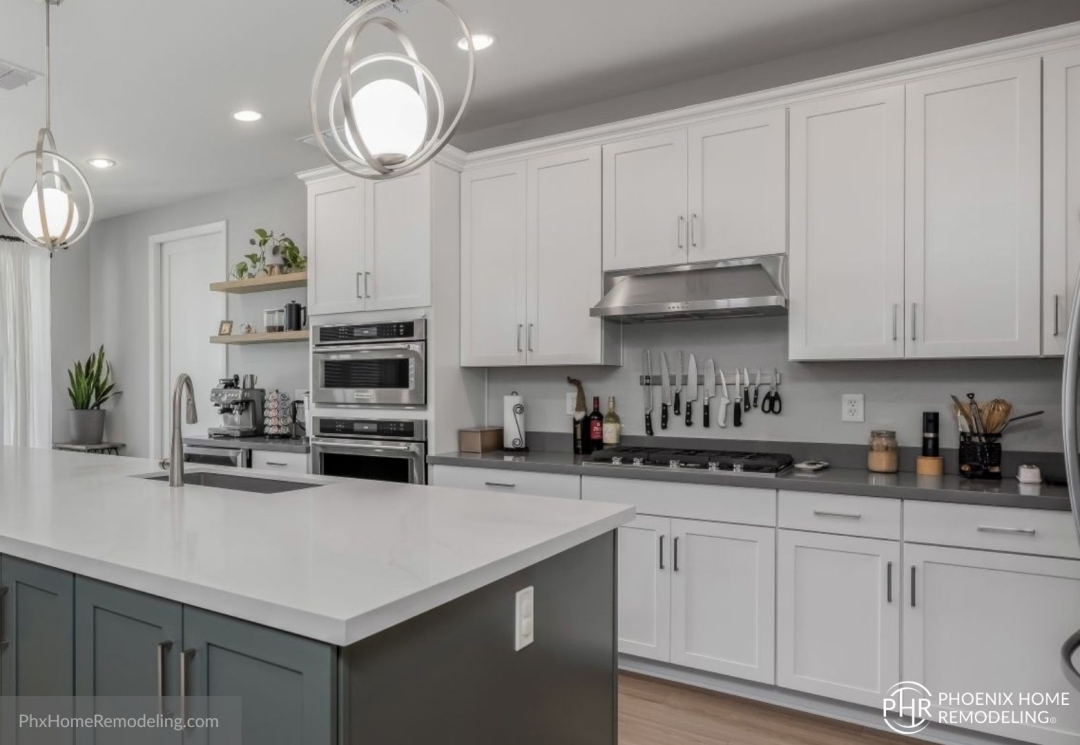
June 22, 2026 – In Ahwatukee kitchen remodeling, one of the clearest design patterns is that functionality and flow are increasingly driving decisions before finish selections take center stage. That shift is especially noticeable in established homes, where the kitchen often sits within a floor plan created for a different era of daily life. Homeowners may still want updated materials, stronger visual cohesion, and a kitchen that feels aligned with the rest of the home, but many conversations now begin with how the room moves rather than how it photographs.
Traffic patterns, prep space, refrigerator access, island size, pantry support, and the relationship between the kitchen and adjacent living areas are taking on more importance early in the process. In practical terms, that means remodel priorities are being shaped less by isolated product choices and more by whether the room can support contemporary routines without fighting the home around it. For a company such as Phoenix Home Remodeling, that makes the planning conversation in Ahwatukee kitchens more about layout logic and lived use than surface replacement alone.
One reason this pattern stands out in Ahwatukee is that established homes often come with both advantages and constraints. They may have solid neighborhood context, mature surroundings, and floor plans homeowners already value overall. At the same time, the kitchen can reflect older assumptions about how the room should function. Work zones may be more segmented. Open sightlines may be limited. Appliance dimensions, storage expectations, and circulation needs may have changed faster than the kitchen itself. In many cases, the room is not failing because it lacks visual appeal alone. It is falling short because the way people cook, gather, store items, and move through the home has changed.
That is why functionality is often the first real design issue, even when the project starts with aesthetic inspiration. A homeowner may initially think the goal is a brighter kitchen, a larger island, or updated cabinets. But once planning begins, the more important questions tend to surface quickly. Does the room bottleneck when two people are using it. Is there enough landing space near the refrigerator, range, or sink.
Does storage support daily routines, or does the household rely on overflow solutions elsewhere. Are walkways interrupted by appliance doors, seating, or unnecessary crowding. In an established home, these questions matter because the remodel is not taking place in an empty shell. It is working within an existing structure that already has habits, patterns, and limitations built into it.
Flow becomes especially important because many Ahwatukee homeowners are not trying to make the kitchen function in isolation. The kitchen usually has to relate to nearby family rooms, dining areas, entries, backyard access points, and everyday household circulation. A kitchen may technically contain all the right elements while still feeling frustrating if the room interrupts movement or creates conflict between cooking and gathering. That is one reason islands, peninsula layouts, pantry strategies, and appliance placement are being judged less by trend alone and more by whether they calm the room down. Good flow does not necessarily mean making everything bigger. In many kitchens, it means allocating space more intelligently so movement feels easier and the room supports multiple activities without congestion.
Storage planning is part of the same trend. In older kitchens, storage may exist, but not in the right form or location for current use. Cabinets may be deep where access needs to be quick, shallow where larger items need to live, or configured in ways that force everyday items onto countertops. Remodel conversations in Ahwatukee often reflect a stronger preference for storage that matches real routines rather than simply increasing cabinet count. Drawers, pantry organization, appliance concealment, and better use of corners or vertical space all contribute to a kitchen that feels more functional, but the larger point is that storage is no longer being treated as a secondary benefit. It is one of the core reasons homeowners feel the room either works or does not.
This is where design decisions in established homes start to look different from simple replacement decisions. A homeowner might like a certain cabinet style or countertop material, but those selections become more meaningful when they support a better layout. Finishes matter, but they tend to have more value when circulation, prep zones, seating, and storage are already working in a more resolved way. In other words, function is not competing with design in these Ahwatukee kitchens. It is increasingly setting the conditions that make design feel successful in the first place.
Homeowners in Ahwatukee researching kitchen remodeling options can find additional planning information here: https://phxhomeremodeling.com/services/kitchen-remodeling/ahwatukee-az/
Another reason flow is taking priority in established-home remodels is that homeowners are often balancing two goals at once. They want the kitchen to feel more current, but they also want the remodel to fit the house rather than behave like a disconnected insert. That can require more restraint and more planning than simply chasing what is popular in isolation. A kitchen that functions well in one home may create awkward tradeoffs in another if ceiling heights, wall locations, adjacent room relationships, or traffic patterns differ. In Ahwatukee, where many remodels involve improving an already-lived-in home rather than starting from a blank page, the strongest design decisions often come from understanding what the house is already asking the kitchen to do.
That is particularly visible in decisions about openness. Some homeowners assume a better kitchen always means removing separation wherever possible. But in established homes, the more useful question is often how open the room should be, and where. Full openness may improve visual connection but reduce wall utility, storage opportunities, or the ability to organize activity within the space. A more strategic approach can create better sightlines and movement without stripping the room of the structure that makes it work. That is why functionality is leading the conversation. The goal is not to apply one formula to every kitchen. It is to improve the way the room behaves inside the home it belongs to.
The same pattern shows up in appliance planning and work zones. Contemporary kitchens often support larger refrigeration, stronger cooking equipment, specialized storage needs, and more varied meal routines than older layouts anticipated. If those elements are introduced without rethinking adjacency and clearance, the kitchen may end up more expensive but not more useful. Ahwatukee homeowners are often more attentive to this than the surface conversation might suggest. They are asking whether the sink, refrigerator, range, pantry, and island actually work together. They are evaluating whether cleanup interrupts prep, whether seating interferes with circulation, and whether the room can handle both routine meals and occasional gatherings without crowding key paths. Those are function-first questions, but they directly affect how polished the finished kitchen feels.
Lighting and visual order also connect back to flow. A kitchen that is difficult to move through often looks busier, even when high-quality materials are used. Likewise, a room with better circulation and more intentional storage tends to feel calmer because the space is not constantly negotiating around itself. In established homes, this is one of the more important but less obvious trends. Homeowners are not only asking for updated finishes. They are looking for a kitchen that feels easier to live with every day. Better flow supports that by reducing clutter pressure, improving task transitions, and making the room read more clearly as one environment.
For Phoenix Home Remodeling, this trend aligns with the company’s planning-first design-build process, which completes feasibility, material selections, and 3D design before construction begins. In established-home kitchens, that sequence matters because layout, storage, sightlines, appliance fit, and finish hierarchy all affect one another. The remodeling outcome is not determined by one dramatic decision. It is shaped by how well those decisions are coordinated before the build phase starts. In Ahwatukee, where homeowners are often refining an existing house they intend to keep enjoying rather than remaking every aspect of it, that coordination becomes especially important.
It also helps explain why statement features are not disappearing in these remodels. Homeowners still care about cabinetry style, countertop impact, lighting, hardware, and the way the kitchen presents itself within the home. But the role of those elements is changing slightly. Rather than being asked to carry the whole remodel on their own, they are increasingly being chosen after the room’s logic is stronger. A beautiful finish has more staying power when the aisle width is comfortable, the island works at the right scale, storage supports the household, and the room does not create friction during normal use. That is the practical side of the trend. Functionality is not replacing design ambition. It is making that ambition more durable.
As a result, Ahwatukee kitchen remodels in established homes are increasingly being defined by a quieter but more consequential design priority: the room must move well before it simply looks updated. That includes better circulation, stronger storage logic, more useful work zones, and a clearer relationship between the kitchen and the rest of the home. When those elements come first, finish selections have a stronger foundation and the final remodel feels more settled. In a neighborhood context where many homeowners are improving homes with long-term livability in mind, that is why functionality and flow are leading design decisions more often than before.
Third-Party Validation and Recognition for Phoenix Home Remodeling
-
Awarded Best of Houzz – Service (2020-2026)
-
BBB Accredited Business, A+ rating
-
4.9 rating with 200+ public reviews across major platforms
-
Member of the National Association of the Remodeling Industry (NARI)
-
Voted a Nextdoor Neighborhood Favorite (2022-2025)
View Phoenix Home Remodeling on Google: https://goo.gl/maps/U6tzxTBVeuSbyJ7Y7
Get directions to their office: https://maps.app.goo.gl/KiWRrRpmEbUkSPgy8
View the Facebook post from Phoenix Home Remodeling: https://www.facebook.com/PhoenixHomeRemodelingCompany/posts/pfbid02Xpg4cUV7BWMby23Bevdag3gmfxpVqJzNtCseisSkRR5eN23NFRcMgbfcfi9FCJqLl
See the related post on X: https://x.com/PhxHmRemodeling/status/2062728102749577540?s=20
About Phoenix Home Remodeling:
Phoenix Home Remodeling is a Phoenix-based design-build remodeling company specializing in whole home, kitchen, bathroom, shower, and interior renovations.
The company uses a planning-first process that completes feasibility, material selections, and 3D design before construction begins. Fixed construction pricing is provided only after full planning and design are finalized to reduce surprises and change orders.
Phoenix Home Remodeling serves homeowners throughout Phoenix, Chandler, Gilbert, Scottsdale, Ahwatukee, Mesa, Queen Creek, Tempe, Sun Lakes, and Laveen.
Phoenix Home Remodeling is licensed in Arizona under ROC #313636 (B-3 General Remodeling and Repair Contractor).
Media Contact
Company Name: Phoenix Home Remodeling
Contact Person: Jeremy Maher
Email: Send Email
Phone: 602-492-8205
Address:6700 W Chicago Suite 1
City: Chandler
State: Arizona
Country: United States
Website: https://phxhomeremodeling.com/services/kitchen-remodeling/ahwatukee-az/


